
How being “nonchalant” has ruined us
By Claire McConnell
No one really teaches you how to feel, only how to hold it together.
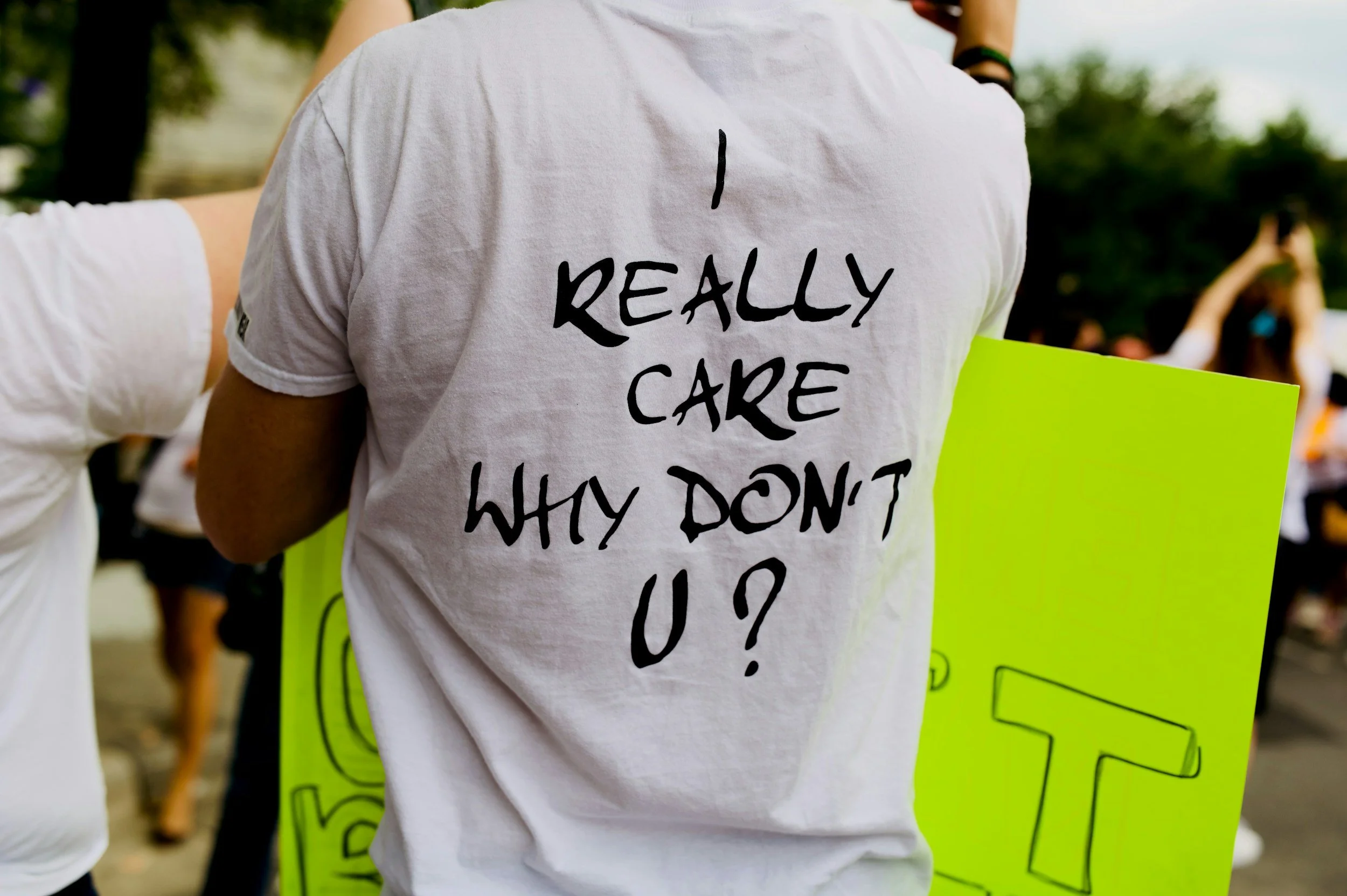
We don’t really talk about it, but “being nonchalant” has turned into more than a personality trait. It’s become a survival strategy. A default setting. Strength is in silence; maturity is emotional muteness.
Somewhere along the way, caring too much started to feel embarrassing.
If you scroll through social media for five minutes, you’ll see it everywhere. The dry texting, the short captions, the ironic detachment. The idea that the worst thing you could possibly be is eager. Trying too hard is somehow worse than not trying at all.
It’s not just an aesthetic anymore. It’s behavioral.
Pop culture hasn’t helped. We’ve grown up watching characters like Tony Stark, who never seems shaken and John McClane, who walks away from explosions like it’s mildly inconvenient. The characters who feel the least — or at least show it the least — often seem the most powerful. Unfortunately, most people can’t afford that kind of stoicism- it slowly becomes a lack of skill.
We absorb these behaviors. We imitate it. Not consciously, maybe. But culturally.
What’s interesting is that nonchalance used to describe how someone handled a moment. Now it’s a character trait.
This shift might be connected to something bigger.
We’re overstimulated. Bombarded with unnecessary information. Constantly. News, opinions, disasters, trends. If we reacted fully to everything we consumed in a day, we’d burn out immediately. So, we adapt, mute, and filter. We pretend not to care because caring about everything would ruin us.
That part makes sense.
But here’s where it gets complicated: when you practice not reacting, eventually you get good at it. Too good.
We start applying that same detachment to relationships, ambition, and joy.
It shows up in small ways. Shorter stories. Understated reactions. Quiet hobbies and muted clothing. Liking something but acting neutral about it. You train yourself not to be impressed. And over time, you actually become less impressed. After all, when you stop calling a sunset what it is, it will no longer be beautiful, and you’ll have missed the chance to say something.
There’s a big safety element to it. Nonchalance protects you from embarrassment. If you never fully try, you can’t fully fail. If you never admit you care, you can’t be rejected for caring more. It’s controlled vulnerability, or complete and pure invulnerability.
Technology makes this easier than ever. You can curate responses. You can leave someone on read and pretend you’re busy. You can talk to five people at once and avoid investing too deeply in any of them. You can maintain the illusion of social fulfillment without ever risking real exposure.
In another era, if you didn’t put effort into people, you’d feel loneliness fast. Now your phone cushions that fall. You can be detached and still stimulated. That’s certainly new.
But here’s the downside: detachment doesn’t only block pain. It also blocks depth.
You don’t just numb embarrassment — you numb excitement. You don’t just mute rejection — you mute connection. You don’t just avoid failure — you avoid success.
There’s a reason so many people our age talk about feeling “behind” or unmotivated. There are studies showing increased academic disengagement and social anxiety in younger generations. And while there are a hundred reasons for that, I can’t help but wonder if chronic nonchalance plays a role. When dopamine is instant and validation is low-effort, long-term effort feels unnecessary.
But here’s the thing: humans aren’t built to feel nothing. As kids, we were dramatic and emotional. We cried loudly. We laughed loudly. We waited at the door when someone we loved was coming home. We were uncool, but also extremely happy.
Somewhere between childhood and now, being expressive started to feel naive.
I’m not saying we should swing to the other extreme and feel everything at maximum intensity. That’s not realistic either. Selective caring is healthy. Emotional regulation is healthy. But emotional erasure isn’t.
Maybe the solution isn’t to completely reject being nonchalant. Maybe it’s just to notice when it’s protecting us versus when it’s limiting us.
Maybe it’s choosing, intentionally, to care about something out loud.
To say the sunset is beautiful. To admit something hurt. To try — even if it doesn’t work.
Stop wadding in shallow waters. Dive into the scary, deep part, and feel the depth of your emotions. Despite the saying, it is always “that deep.” You just need to dip below the surface, find the meat at the bottom of the soup bowl.
It’s hard, but once you stop opting out of participation, you’ll feel more fulfilled and satisfied with your life. After all, you only get one. Don’t waste it on trying to pretend it’s not worthwhile.